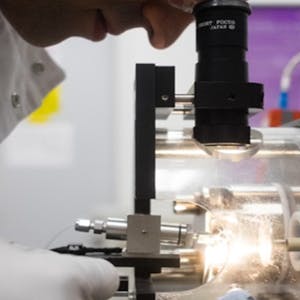
Industrial Biotechnology
About this course
Fossil fuels have been the primary energy source for society since the Industrial Revolution. They provide the raw material for the manufacture of many everyday products that we take for granted, including pharmaceuticals, food and drink, materials, plastics and personal care. As the 21st century progresses we need solutions for the manufacture of chemicals that are smarter, more predictable and more sustainable. Industrial biotechnology is changing how we manufacture chemicals and materials, as well as providing us with a source of renewable energy. It is at the core of sustainable manufacturing processes and an attractive alternative to traditional manufacturing technologies to commercially advance and transform priority industrial sectors yielding more and more viable solutions for our environment in the form of new chemicals, new materials and bioenergy. This course will cover the key enabling technologies that underpin biotechnology research including enzyme discovery and engineering, systems and synthetic biology and biochemical and process engineering. Much of this material will be delivered through lectures to ensure that you have a solid foundation in these key areas. We will also consider the wider issues involved in sustainable manufacturing including responsible research innovation and bioethics. In the second part of the course we will look at how these technologies translate into real world applications which benefit society and impact our everyday lives. This will include input from our industry stakeholders and collaborators working in the pharmaceutical, chemicals and biofuels industries. By the end of this course you will be able to: 1. Understand enzymatic function and catalysis. 2. Explain the technologies and methodologies underpinning systems and synthetic biology. 3. Explain the diversity of synthetic biology application and discuss the different ethical and regulatory/governance challenges involved in this research. 4. Understand the principles and role of bioprocessing and biochemical engineering in industrial biotechnology. 5. Have an informed discussion of the key enabling technologies underpinning research in industrial biotechnology 6. Give examples of industrial biotechnology products and processes and their application in healthcare, agriculture, fine chemicals, energy and the environment.
96/100
CourseAsk score
- What the provider tells you
- 45/45
- Who stands behind it
- 35/35
- How complete the listing is
- 16/20
Scores how much the provider publishes and who stands behind it — not how well it is taught.
What you'll learn
- Understand enzymatic function and catalysis
- Explain the technologies and methodologies underpinning systems and synthetic biology
- Discuss the diversity of synthetic biology applications and the ethical and regulatory challenges involved
- Understand the principles of bioprocessing and biochemical engineering
- Identify industrial biotechnology products and processes in healthcare, agriculture, and energy
Course objectives
- To provide a thorough understanding of key enabling technologies in industrial biotechnology
- To explore the impact of these technologies on sustainable manufacturing
- To facilitate informed discussions on bioethics and responsible innovation
Price shown by Coursera — confirm on their site.
Enroll on CourseraYou'll be redirected to Coursera to complete enrollment.
- Listed & compared by CourseAsk
- English · 0
 edX
edX



 Coursera



Compared on these lists
Where this course ranks against the alternatives.